
And again we welcome two new members of the lab: Stefan Paßlick (postdoc) and Leon Kremers (BSc. student). And it was also about time to take a new beautiful picture of us. In the sun, this time.
Category Archives: News
Bonn Brain3 Meeting 2019 – registration open

The registration for next year’s Bonn Brain3 meeting is open!
This time we are taking part in the organization of the meeting and are happy to have brought together an impressive line-up of speakers. The meeting features Talks & Poster Sessions, Short Talks & Lightning Talks by Junior Scientists, Poster Prizes for Postdocs and PhD Students, a Neuroscience Art Competition and a Young Investigator Research Session.
Please click here for the poster or go to the Bonn Brain3 website.
Novel optical tool to visualize glycine signalling
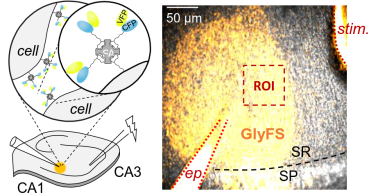 Together with the lab of Colin Jackson at the Australian National University in Canberra, we have been able to design, characterize and use the novel optical glycine sensor GlyFS. Using this sensor we could directly show that the levels of the inhibitory neurotransmitter and NMDA receptor co-agonists glycine decrease with postnatal age, increase in response to plasticity-inducing neuronal stimuli and display gradients between synaptic and extrasynaptic locations in the hippocampus.
The full paper can be found here.
Welcome to the lab
This is to welcome two new colleagues to the lab. Petr Unichenko is joining as a postdoctoral research fellow and Katharina Hill as a medical student.
Congratulations and bye-bye
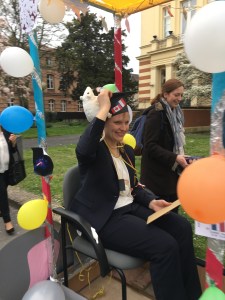 Congratulations to Steffi for the glorious finish of her PhD thesis today. The final verdict after her defense, which for some reason included a short discussion of the sturgeon habenula, was a fully-deserved summa cum laude. Great!
Unfortunately for us, Steffi will also move on in a few days and leave the very cool ivory tower of science to work with Bayer.
Heparan sulfates and astrocytes
Just before the end 2016 we received the very welcome news that our study on the role of heparan sulfates got accepted for publication. Together with the lab of Alexander Dityatev we uncovered that heparan sulfates are required for the integrity of the axon initial segment of CA1 pyramidal cells. Their lack leads to reduced pyramidal cell excitability, reduced synaptic plasticity, altered theta oscillations in vivo and impaired context discrimination (link). The end of the year also saw the publication of a few other collaboration projects including the effect of dopamine on the Ca2+ signalling of hippocampal astrocytes (link) and the coupling properties of thalamic astrocytes (link) among others.
Please also see our selected Publications for more details.
New lab members and new lab picture
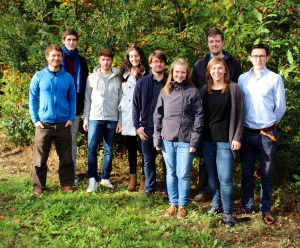
This is to welcome two new PhD students to the lab. Catia Domingos will be primarily working on molecular signals that acutely modify astrocyte morphology whereas Alberto Pauletti will look into the relationship between astrocyte morphology and astrocyte gap junction coupling.
And here is the group this autumn …
Claire is now Dr King
… and another welcome opportunity to celebrate. Claire passed the thesis oral examination yesterday. For the past years she has explored ‘The role of resting Ca2+ in astrocyte Ca2+ signalling’ and now she is Dr King. Well done and congratulations!
More things to celebrate
It is time for a new round of congratulations.
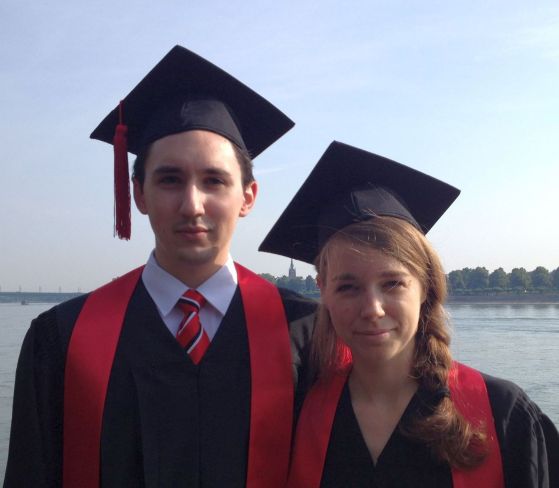 The first two go to Eva and Björn who were MSc students in the lab for the past months working on astrocyte Ca2+ signaling and potassium clearance. ‘Were’ because their theses have been written, corrected and submitted and we are fairly certain we will have to address them by their appropriate title ‘Master’ soon.
The third goes to Michel. He successfully applied for a young investigator grant within the DFG SPP1757 on glial heterogeneity and now got some money for a student assistant for six months (research assistant job ad).
Well done everybody!
New group picture
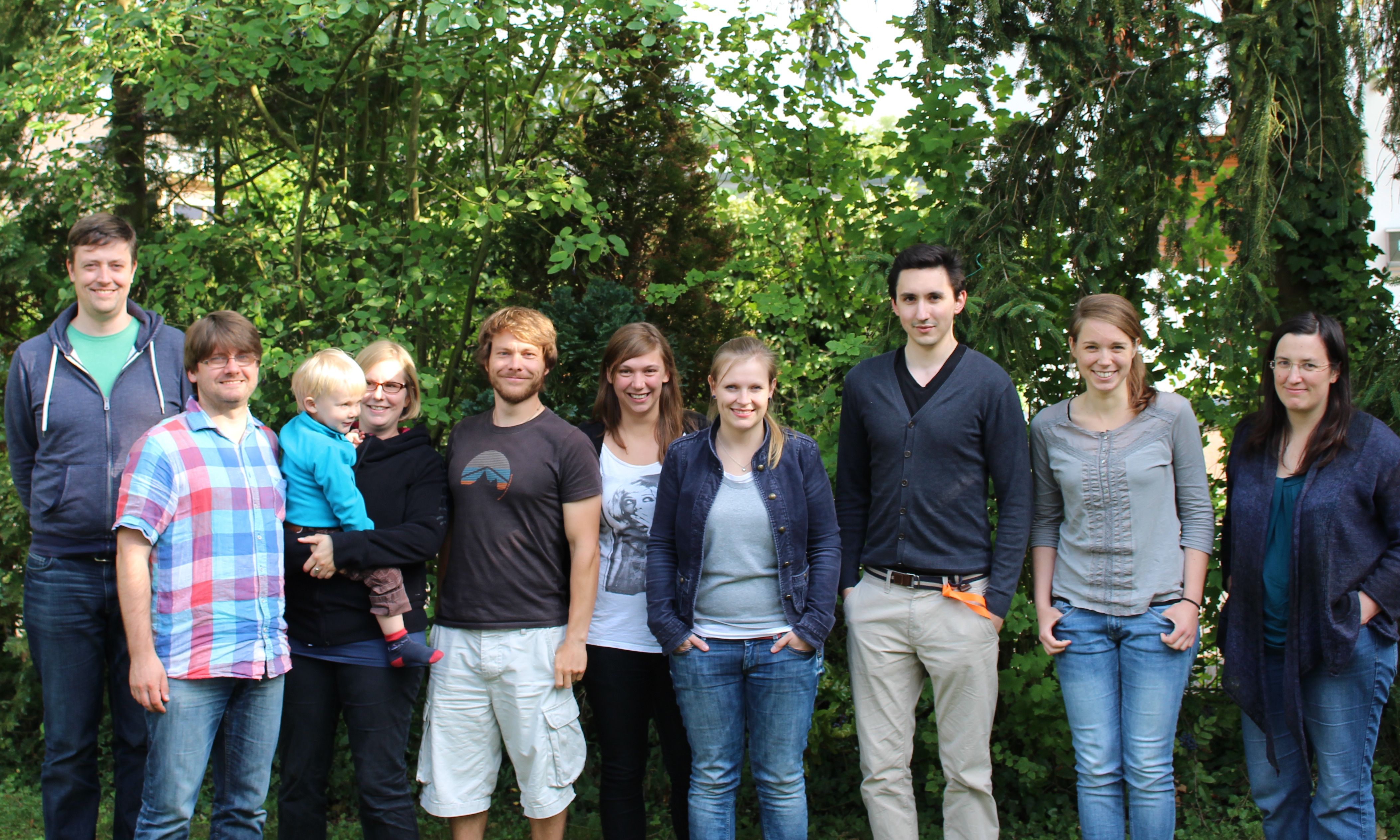 We finally managed to have our BBQ. A good opportunity to take a new group picture. From left to right Daniel, Christian, Anne, Michel, Kirsten, Steffi, Björn, Eva and Claire. A very casual picture. But still an improvement from last year’s “Orgelpfeifen”.
 Synaptic and glial plasticity lab